CI/CD Pipeline Best Practices: A DevOps Engineer Guide
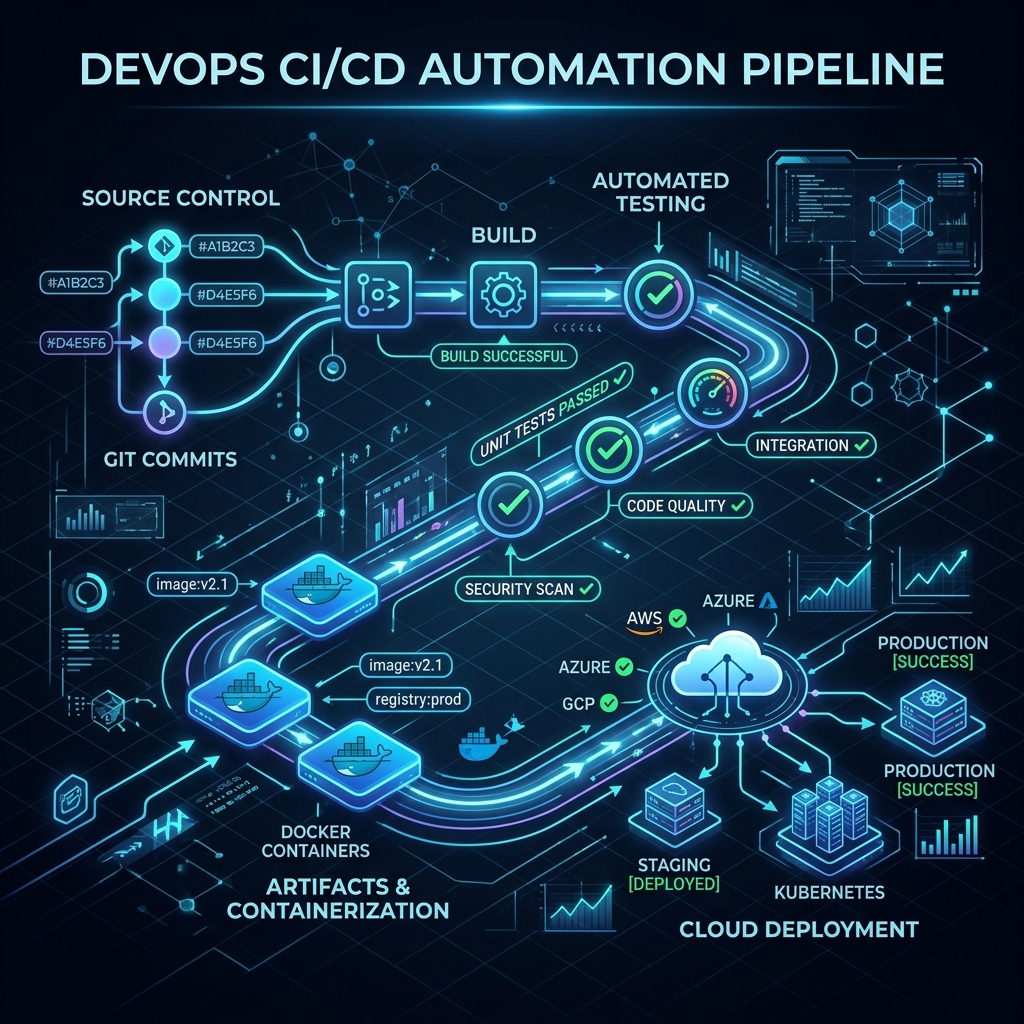
Introduction to Modern CI/CD
In modern software engineering, Continuous Integration and Continuous Deployment (CI/CD) pipelines form the backbone of delivery pipelines. Designing a secure, scalable, and performant pipeline requires following industry standards and patterns. In this article, I will share key lessons I have learned setting up production pipelines.
1. Keep Build Artifacts Immutable
Once an artifact is built, it should never be rebuilt in downstream environments. Rebuilding an artifact for testing, staging, and production opens doors for subtle configuration discrepancies. Build your Docker image or binary once, push it to a secure repository, and promote the same image tags through your pipeline stages.
# Good: Build once, deploy everywhere
docker build -t my-app:${COMMIT_SHA} .
docker push my-app:${COMMIT_SHA}
2. Fail Fast & Early
Your pipeline should be optimized to catch bugs at the earliest stage. Arrange jobs in order of duration and vulnerability:
- Static Analysis & Linting: Under 30 seconds. Checks code style and syntax rules.
- Unit Tests: Under 3 minutes. Validates business logic.
- Integration & Security Scans: Under 10 minutes. Finds vulnerability vulnerabilities.
- Deployment: Executes only after all checks pass.
[!TIP] Always run security scans like SonarQube, Trivy, or Snyk in your CI pipelines to catch common vulnerabilities before building containers.
3. Manage Secrets Securely
Never store passwords, keys, or API tokens in code or Git repositories. Use secure environment variables provided by CI engines (GitHub Actions Secrets, GitLab CI Variables) or integrated secret managers like HashiCorp Vault or AWS Secrets Manager.
Use short-lived IAM roles (OIDC) instead of static access keys to grant pipelines authorization to your cloud services.
Conclusion
By implementing immutability, failing fast, and securing secrets, you will establish a high-trust pipeline that allows your development team to release code safely and frequently.